

Poultry Litter Biochar
Poultry litter biochar is char made from broiler litter, on the farm, in our ZEDE pyrolysis system. The litter’s nutrients stay in it, the heat goes back to the houses, and what leaves the farm is a stable, sterile, carbon-rich product rather than hundreds of tonnes of wet litter.
- Poultry litter char
- NPK 5-7-9 · 52–55% fixed carbon · pH 10.5
- Other feedstocks
- Poultry litter, poultry manure, digestate from a range of feedstocks, other challenging organic feedstocks, and wood
- Supply
- 1-tonne bags, collected or delivered
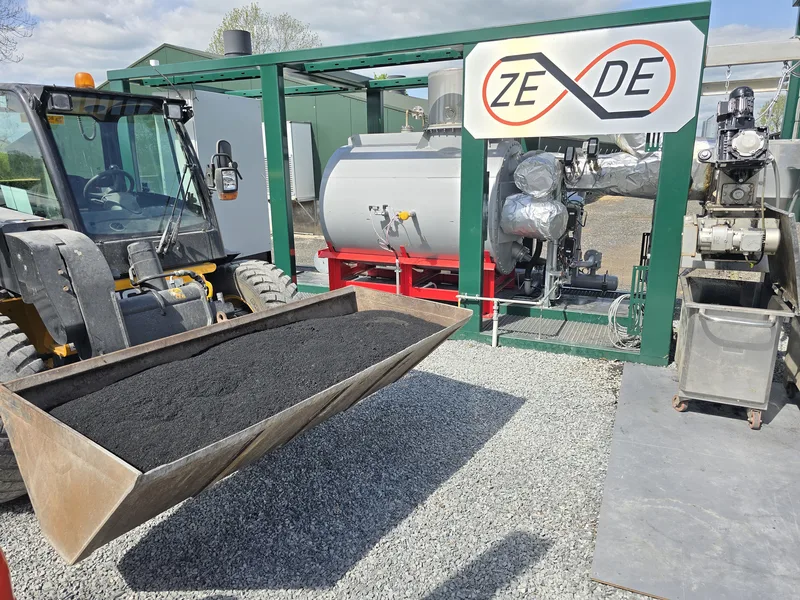 Broiler litter biochar
Poultry litter biochar vs wood biochar
Both are biochar. They are not the same product. Wood biochar is nearly all carbon; poultry litter biochar is carbon plus the minerals the litter carried in. The analysis below is from our own broiler litter char; the full lab sheet is available on request.
Wood figures are typical EBC and IBI ranges for untreated wood biochar.
| Poultry litter biochar (ours) | Wood biochar | |
|---|---|---|
| Feedstock | Broiler litter from the farm’s own houses | Wood chip |
| Made | On the farm, on ZEDE, after the crop | Off farm |
| Fixed carbon | 52–55% | 70–85% (typical) |
| N-P-K | ≈ 5-7-9 | <1 · trace · ~1 |
| pH | 10.5 | 8–10 |
| Nutrients | Carries the litter’s nitrogen, phosphorus and potassium | Almost none |
| Form | 1-tonne bags, dry mass and moisture recorded per bag | Bags or loose |
Measured on broiler litter char from ZEDE. Values vary with litter and run; confirmed on the batch record.
Litter in, heat and poultry litter biochar out
After each crop the litter goes into ZEDE instead of onto a lorry. The water in it is driven off and the heat returned to the broiler houses for the next crop; the char comes out bagged, with dry mass, moisture and packing temperature recorded for every bag by our BDV system. About 70% less mass leaves the site than the litter that went in, and it leaves as a product.
Nothing is added to the house. The char never enters the bedding; it is made from the bedding once the birds have gone. That is the whole difference between poultry litter biochar and “biochar in poultry litter”, and we set it out in Woodchip biochar in poultry litter is not poultry litter biochar.
- Made from the farm’s own broiler litter, on the farm
- Heat from the process goes back to the houses, keeping litter dry through the crop
- Sterile and stable: the nutrients travel as a product, not as wet litter
- Dry mass, moisture and temperature logged per bag for registries and buyers
From farm by-product to biochar
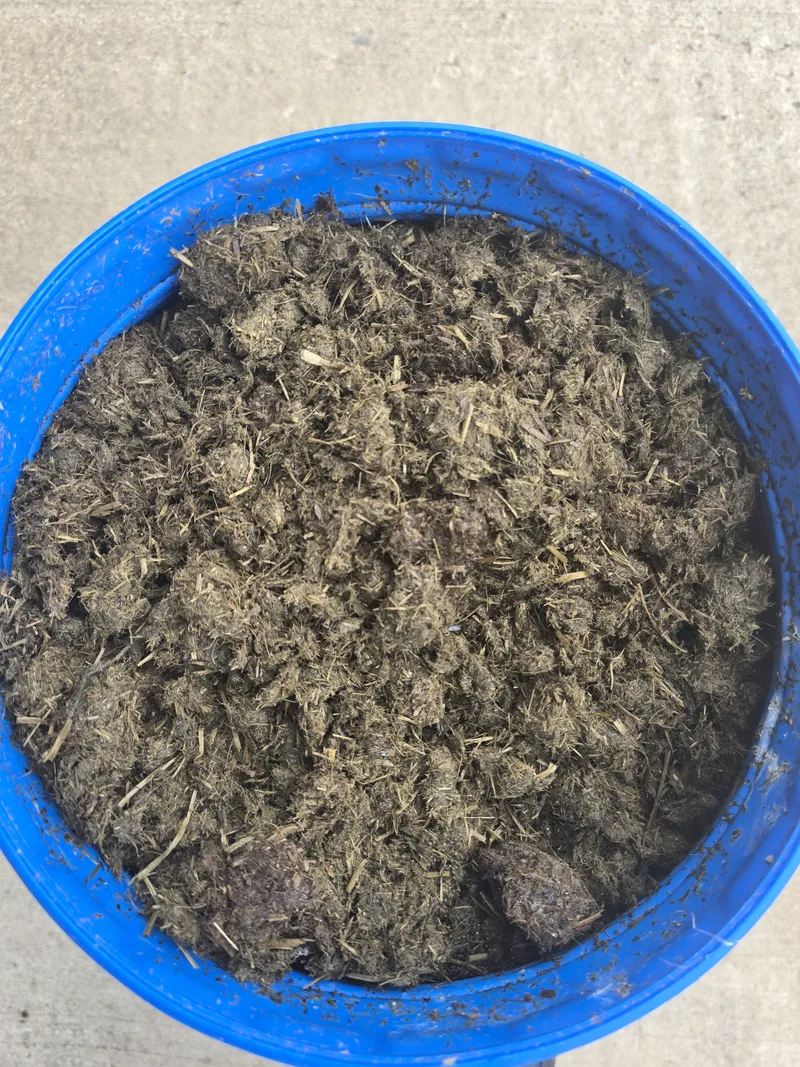
Before
Digestate fibre: wet, fibrous and hard to handle.
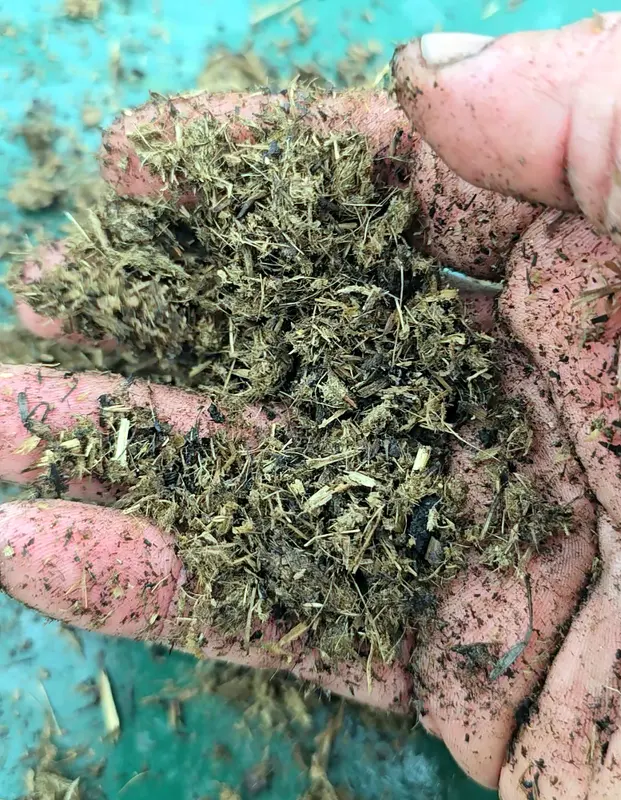
Conditioned
Difficult material prepared and conditioned.
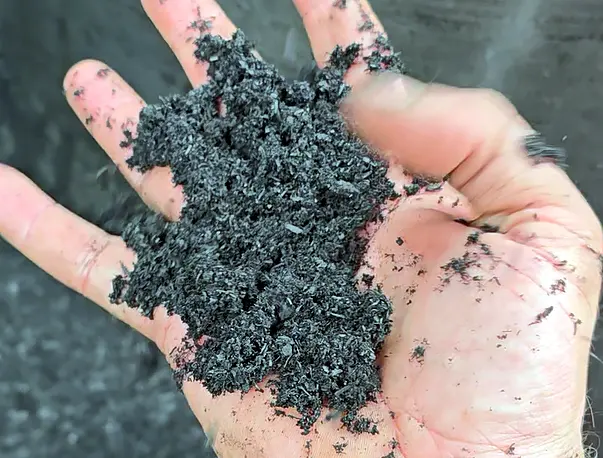
After
Biochar: stable, carbon-rich and ready to condition, charge and bag.
We Make Biochar.
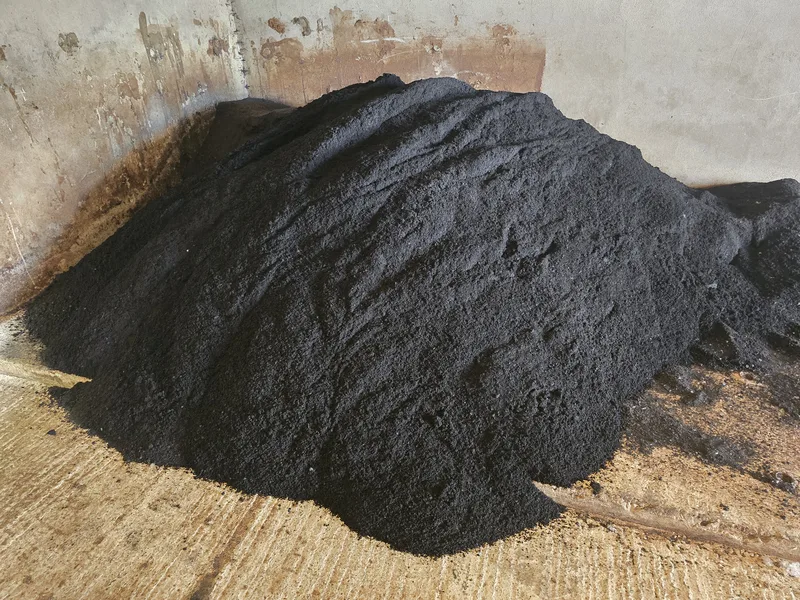 Broiler litter biochar
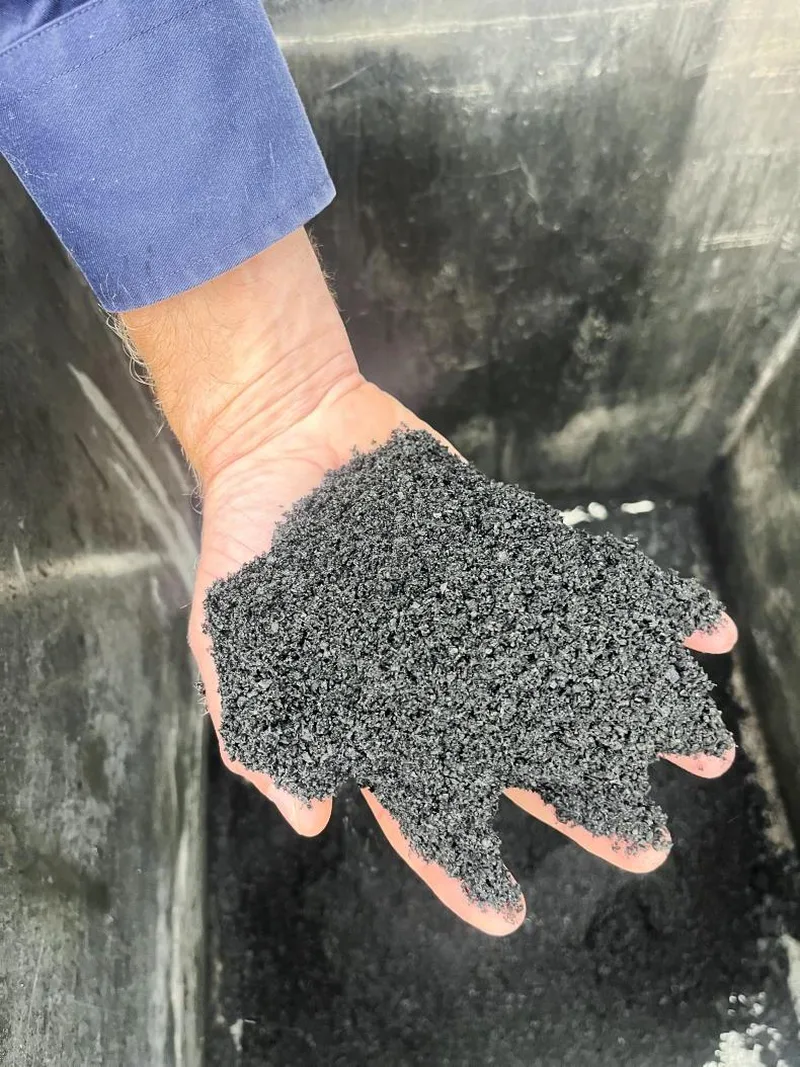 Broiler litter biochar
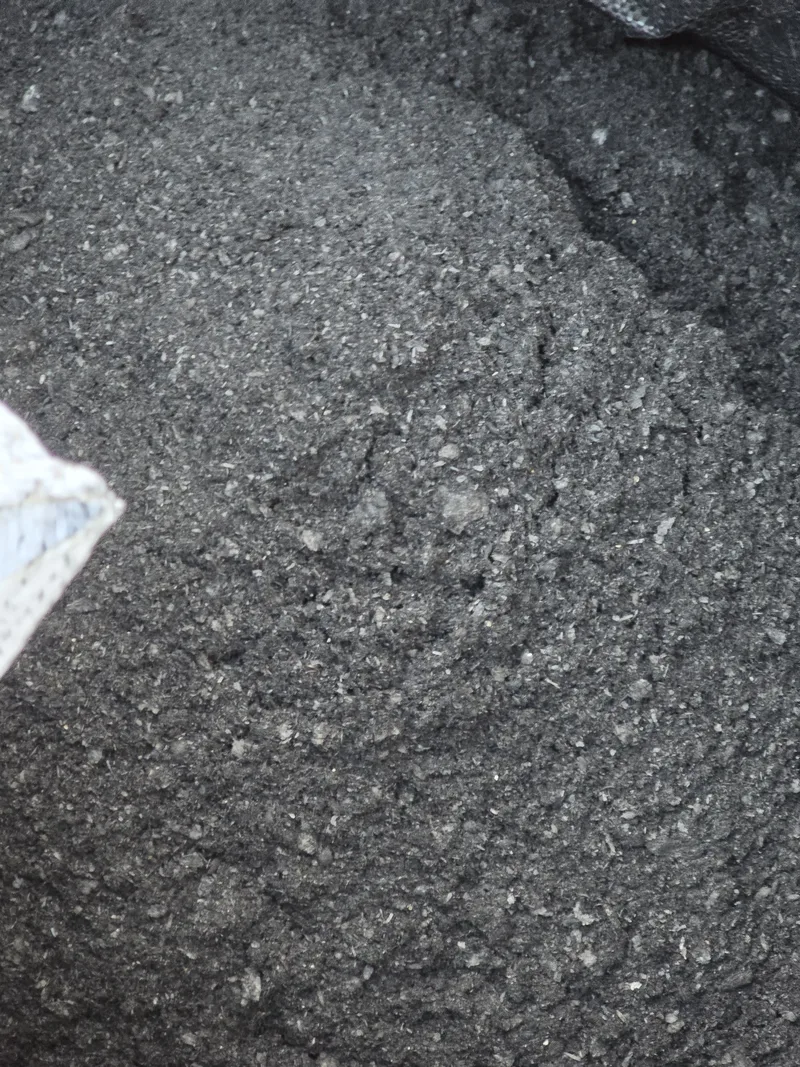 Digestate biochar
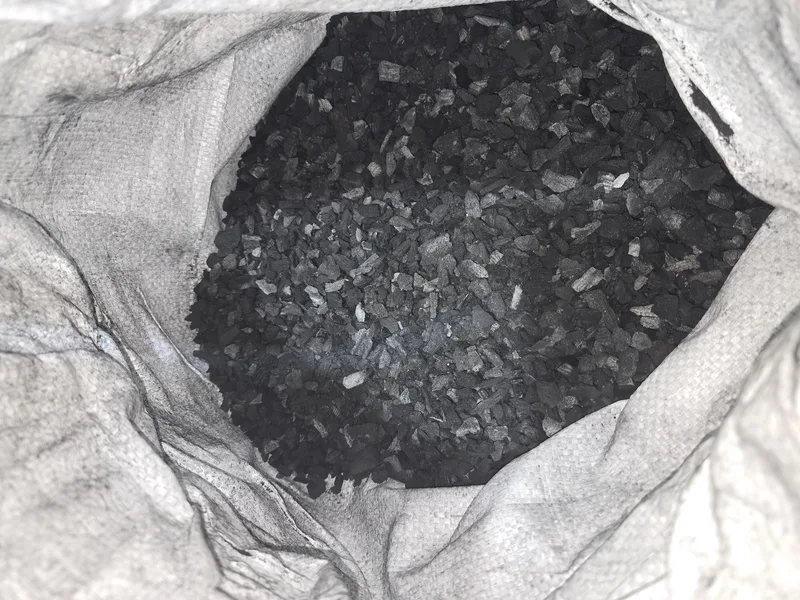 Woodchip biochar
Poultry litter biochar: questions we get asked
What is poultry litter biochar?
Char made by pyrolysing poultry litter at high temperature with little or no oxygen. The minerals in the litter stay in the char, so it carries nitrogen, phosphorus and potassium that wood biochar does not, at a lower fixed-carbon content. Also called broiler litter biochar or chicken litter biochar.
How is poultry litter biochar different from wood biochar?
Feedstock and chemistry. Wood biochar is 70–85% fixed carbon with almost no nutrients; our broiler litter char is 52–55% fixed carbon with an NPK of about 5-7-9 and a pH of 10.5. One is a carbon product; the other is a carbon product that also carries the litter’s nutrients.
Is adding wood biochar to poultry litter the same thing?
No. That is wood char made elsewhere and mixed into the bedding, which then leaves with the litter at clean-out. Poultry litter biochar is made from the litter itself, after the crop, on the farm. Our opinion piece sets out why the two should not share a name.
What is it used for?
As a soil improver and a nutrient-carrying amendment: it is sterile, stable and moves easily, so the nutrients can go where they are needed. We supply it in 1-tonne bags, collected or delivered.
Can poultry litter biochar earn carbon credits?
Biochar carbon removal methodologies credit the dry mass and stable carbon of the char produced, with measured evidence. Eligibility is decided by the registry and the plant’s approval; our BDV system records the dry mass, moisture and packing temperature of every bag for that purpose.
Do you sell biochar from other feedstocks?
We have carbonised poultry litter, layer manure, digestate and woodchip on ZEDE. Poultry litter biochar is our standard product; other feedstocks are made to order.
Poultry litter biochar is made in capital plant that needs an animal by-product approval. ZEDE is designed around the on-farm conditions in those rules; the route for a pyrolysis plant inside them is still being settled with the regulators and we do not claim an approval we do not yet hold.