
What dMRV is
Measurement, reporting and verification is the evidence trail that turns tonnes of biochar into verified credits. Digital MRV captures it with instruments at the point of production, so every batch has a timestamped, tamper-evident record an auditor can check: load cells for mass, an inline moisture sensor, temperature probes and a logger tying each reading to a bag.
 LIVE
LIVE| Batch | Time | Wet kg | Moist % | Dry kg | Status |
|---|---|---|---|---|---|
| B-0419 | 11:03 | 512.4 | 29.6 | 360.8 | ● Recording |
| B-0418 | 10:42 | 1,008.0 | 30.1 | 704.6 | Logged ✓ |
| B-0417 | 10:21 | 1,015.2 | 29.4 | 716.7 | Logged ✓ |
| B-0416 | 10:00 | 996.8 | 30.6 | 691.8 | Logged ✓ |
Why it matters now
Isometric’s biochar protocol quantifies on a dry-mass basis, needs at least three samples per measured batch, and expects moisture measured or controlled for every batch. Verra approved its first credits under a dMRV pilot in February 2026. Producers who hand over clean, instrumented data get through verification faster and are more attractive to buyers.
The numbers that matter
| Measurement | Why it matters | Typical method |
|---|---|---|
| Wet mass | The starting point for every tonne claimed | Load cells or a screw / belt weigher |
| Moisture | Converts wet mass to dry mass | Inline microwave or NIR, checked against oven-dry samples |
| Temperature | Fire safety and the ≤40 °C shipping limit | Probe at the fill head |
| Batch identity and time | Traceability to storage or application | Logger with batch and bag IDs |
| Inoculant dose | Records what was added to charged char | Flow meters on each dosing line |
| Calibration records | Proves the instruments were right | Certified weights, oven-dry checks |
Where manual MRV falls down
- Transcription errors between scales, notebooks and spreadsheets.
- Unrepresentative samples, especially for moisture: char straight from a quench is wetter than char that has stood.
- Gaps in the record on busy shifts or when a sensor is offline.
- Slow verification, as auditors reconstruct what happened.
If your char ships by sea, the same bag-level temperature record fills in the IMDG declaration. The ≤40 °C rule →
dMRV readiness checklist
- Every bag or batch weighed on calibrated scales.
- Moisture measured for every batch, not estimated from an occasional sample.
- Temperature on the day of packing recorded for every bag.
- Each reading tied to a batch ID, bag ID and timestamp.
- Data captured automatically and not editable without a trace.
- Calibration certificates current.
- A batch report for registry, verifier and customers in minutes.
BDV – Biochar Digital Verification
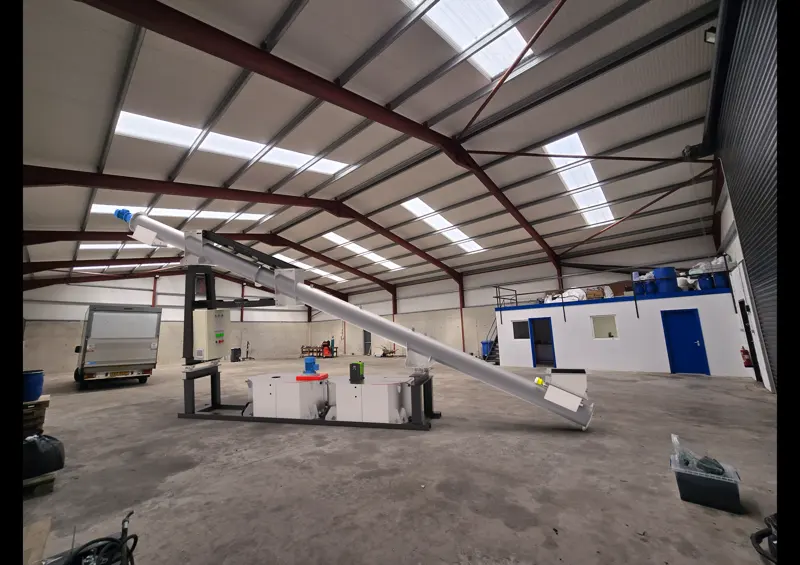
BDV systems meter, weigh, moisture-test and bag your char, logging every batch into a tamper-evident record. Sized from BDV-50 to BDV-1000 kg/h dry char, and retrofittable to existing lines.
Sources
- Isometric, Biochar Production and Storage protocol v1.3
- MSC, Transportation of charcoal (carbon): new regulation as of 1 January 2026
- Britannia P&I, Carriage of charcoal and other carbon, UN 1361 and 1362
- Quantum Commodity Intelligence, Digital MRV providers support new biochar, BECCS projects (March 2026)
General information, not certification or legal advice. Check the current version of your registry’s methodology and the IMDG Code with your verifier and carrier.